Skip to content
|
Special Promotion
Ultimate Discount
|
55% OFF
|
Special Promotion
Ultimate Discount
|
55% OFF
|
Special Promotion
Ultimate Discount
|
55% OFF
|
Special Promotion
Ultimate Discount
|
55% OFF
|
Special Promotion
Ultimate Discount
|
55% OFF
|
Special Promotion
Ultimate Discount
|
55% OFF

Entry Doors — Types & Styles

What to consider for looks, durability, security, and comfort—plus how to read performance labels.
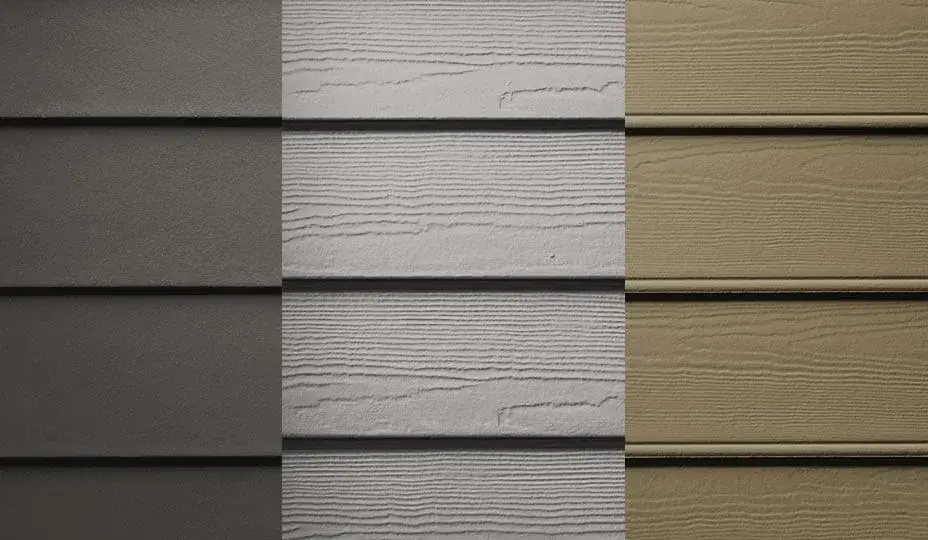
RS26489_JamesHardie_Shot05_022-scr

What You’re Choosing When You Pick an Entry Door

Your entry door does more work than any other door in your home. It handles weather, gets used multiple times daily, needs to look good from the street, and serves as your first line of security.
 
Your decision comes down to three main choices: material (steel, fiberglass, or wood), glass configuration (how much light and where), and hardware (locks, handles, and how everything seals). Beyond those basics, check the NFRC label to compare performance — how well a door insulates (U‑factor), how much solar heat passes through glass (SHGC), how much daylight comes through (VT), and how tight the seal is when closed (AL).
 
This page walks through those decisions from a style and performance perspective. It does not cover installation steps or pricing; see linked pages for process, calculator, and financing. 

Here’s what you’ll see:

Icon-Nov-23-2025-06-35-10-8273-AM
What entry doors do and why material choice affects durability, maintenance, and appearance 
Icon-Nov-23-2025-06-35-10-8273-AM
Where entry doors work best on your home—front entrances, side entries, garage access points
Icon-Nov-23-2025-06-35-10-8273-AM
Steel vs. fiberglass vs. wood—trade‑offs for looks, upkeep, and performance
Icon-Nov-23-2025-06-35-10-8273-AM
Glass options and sidelites—balance natural light with privacy and efficiency
Icon-Nov-23-2025-06-35-10-8273-AM
Hardware and security features—why multi‑point locks matter for both safety and comfort
Icon-Nov-23-2025-06-35-10-8273-AM
How to read NFRC labels—what U‑factor, SHGC, VT, and AL mean in plain terms 
Icon-Nov-23-2025-06-35-10-8273-AM
Style options—panel designs, lite configurations, finishes, and matching your architecture 
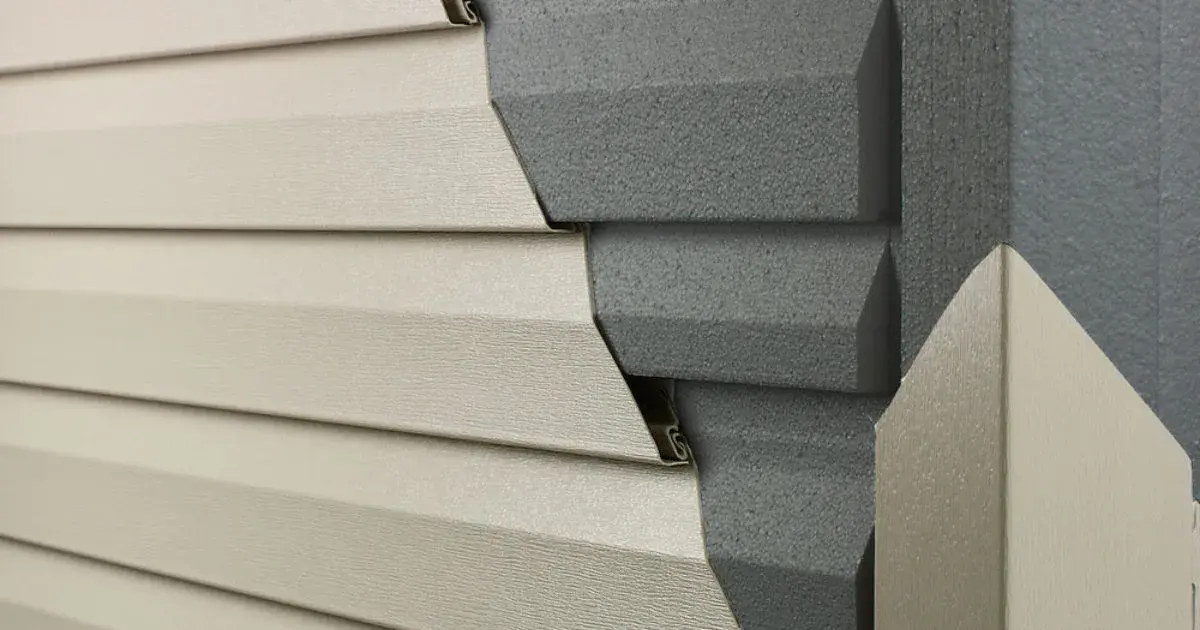
neopor_insulated_siding_lg

Where Do Entry Doors Work Best?

Front Entrances

The main access point and curb‑appeal anchor. Front entries get the most weather exposure—sun, rain, snow, wind—so material choice and finish matter. Covered entries expand your options; fully exposed entries benefit from fiberglass or steel.
 

Side Entries

Less formal, often used from driveway or yard. Function and sealing take priority. Steel is a durable, secure, budget‑friendly pick.
 

Attached Garage Entries

Where your garage connects to your home, building codes commonly require a fire‑rated door. Most homeowners choose steel for durability and security. High‑quality hardware is important here due to frequent daily use.

Exposure Factors

Icon-Nov-23-2025-06-35-10-8273-AM
Sun exposure: South‑facing doors fade finishes; large glass increases solar heat (see SHGC).
Icon-Nov-23-2025-06-35-10-8273-AM
Covered vs. uncovered: Overhangs help wood last; uncovered entries favor fiberglass or steel.
Icon-Nov-23-2025-06-35-10-8273-AM
Steps & landing clearance: Ensure swing clearance; if adding a storm door, account for both swings.
house-siding

What Are the Different Entry Door Materials?
Steel Entry Doors

Steel skins over a wood/composite frame with insulating foam cores. Durable, affordable, and low‑maintenance; can dent from hard impacts. Smooth or embossed wood‑grain looks; factory‑painted or primed. Check U‑factor on the NFRC label for insulation performance.
 

Fiberglass Entry Doors

Fiberglass skins over a wood/composite frame with foam core. Stable through temperature swings; resists warping, cracking, and rot. Mimics wood grain convincingly or comes smooth for modern looks; stain or paint as desired.
 

Wood Entry Doors

Premium, authentic look and feel (mahogany, oak, cherry, fir). Requires periodic finishing; more sensitive to exposure. Solid wood insulates naturally but generally less than foam‑core steel or fiberglass. Glass package often drives overall performance more than the slab.
 

Performance Note

For doors with glass—sidelites, transoms, or lites—the glass package affects energy performance more than the slab material. Compare U‑factor (insulation), SHGC (solar heat), VT (daylight), and AL (air leakage) on the NFRC label.
03de09cd-49b4-42b2-a6cb-c23eef881dce

What Entry Door Glass Options Are Available?

Glass Types

Icon-Nov-23-2025-06-35-10-8273-AM
Clear glass: maximum daylight, minimum privacy.
Icon-Nov-23-2025-06-35-10-8273-AM
Frosted/textured glass: daylight with obscured view (reeded, seeded, rain, frosted).
Icon-Nov-23-2025-06-35-10-8273-AM
Decorative glass: patterns/bevels/etches for style with partial privacy. 

Performance Trade‑Offs

Icon-Nov-23-2025-06-35-10-8273-AM
VT (Visible Transmittance): higher = brighter entry; lower = reduced glare/brightness.
Icon-Nov-23-2025-06-35-10-8273-AM
SHGC (Solar Heat Gain Coefficient): lower helps reduce heat from sun‑exposed doors; higher can allow passive gains in winter.

Sidelites and Transoms

Sidelites and transoms add daylight without enlarging the slab. Ensure continuous weather‑seals at all transitions; check AL (air leakage) on labels—lower is better.
neopor_insulated_siding_lg

What Hardware and Security Features Matter?

Multi‑Point Locking Systems

Engage at top, middle, and bottom for stronger security and even compression around the frame—helping weatherstripping seal consistently compared to a single deadbolt.

Deadbolt Specifications

Icon-Nov-23-2025-06-35-10-8273-AM
1‑inch throw (bolt extension into the strike).
Icon-Nov-23-2025-06-35-10-8273-AM
ANSI/BHMA Grade 1 (highest) or Grade 2 for robust residential security.
Icon-Nov-23-2025-06-35-10-8273-AM
Reinforced strike plate with long screws into wall framing.

Hinge Quality

Use long screws into framing; consider non‑removable hinge pins for outward‑swing doors.
 

Hardware Finishes

Icon-Nov-23-2025-06-35-10-8273-AM
Oil‑rubbed bronze — dark, traditional
Icon-Nov-23-2025-06-35-10-8273-AM
Satin nickel — neutral, modern
Icon-Nov-23-2025-06-35-10-8273-AM
Polished brass — bright, classic
Icon-Nov-23-2025-06-35-10-8273-AM
Matte black — contemporary

ADA‑Compliant Levers

Lever handles are easier to operate than knobs and support aging‑in‑place or reduced hand strength.
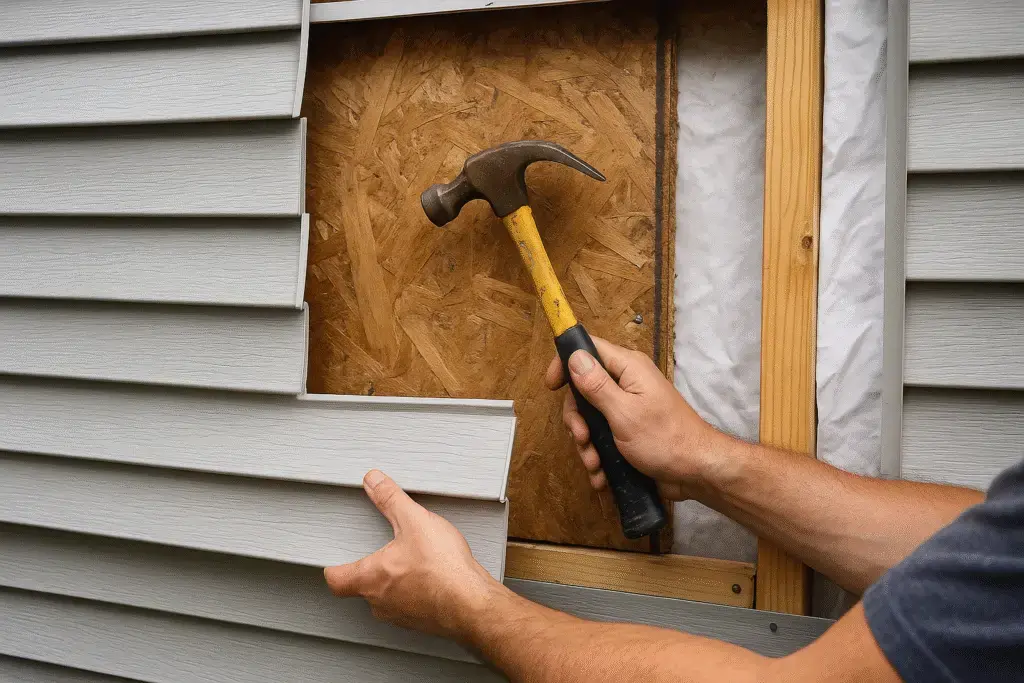
ChatGPT-Image-Aug-20-2025-09_12_57-PM-1024x683

How Do Entry Doors Affect Comfort and Air Sealing?

Air Leakage (AL) Rating

AL measures how much air passes when closed (lower is better). Sliding doors typically have higher AL than swing entry doors because panel interfaces and weatherstripping wear increase leakage over time.

Fit and Installation Quality

Icon-Nov-23-2025-06-35-10-8273-AM
Alignment: frame level, plumb, square so gaps are consistent.
Icon-Nov-23-2025-06-35-10-8273-AM
Weatherstripping: should compress slightly all around—no light showing. 
Icon-Nov-23-2025-06-35-10-8273-AM
Threshold seal: adjust sweeps/compression periodically; thresholds wear with use.

Seasonal Performance

Materials expand/contract with temperature/humidity. Wood changes the most; fiberglass and steel are more stable. In freeze‑thaw climates, moisture in gaps can expand and damage seals—proper fit and sealing prevent this.
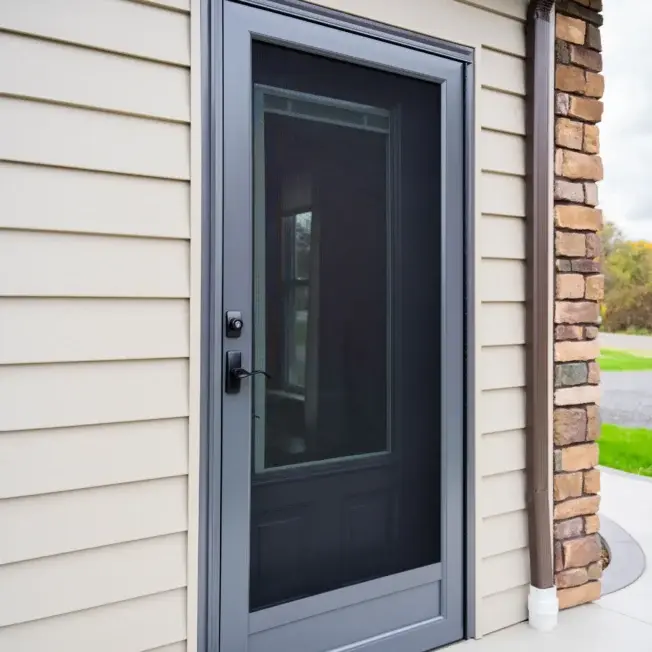
DuraGuard-096-Storm-Door-Nightfall.jpg-652x652

How to Read the NFRC Label

U‑Factor — Insulation

Lower means better resistance to heat flow; helps keep interiors comfortable year‑round.

SHGC — Solar Heat Gain Coefficient

Lower blocks more solar heat through glass; choose based on sun exposure and climate goals.
 

VT — Visible Transmittance

Higher lets in more daylight; balance with privacy needs and glare.
 

AL — Air Leakage

Lower indicates tighter seals and fewer drafts. Evaluate alongside fit and installation quality.

Using the Label

Icon-Nov-23-2025-06-35-10-8273-AM
Balance all four metrics for your exposure and comfort goals.
Icon-Nov-23-2025-06-35-10-8273-AM
Larger glass areas need better glass packages to maintain comfort.
Icon-Nov-23-2025-06-35-10-8273-AM
Compare products side‑by‑side using the same NFRC fields.
Rectangle 161125162-1

What Entry Door Styles Are Available?

Panel Designs

Icon-Nov-23-2025-06-35-10-8273-AM
2‑panel — simple, modern
Icon-Nov-23-2025-06-35-10-8273-AM
3‑panel — Craftsman emphasis
Icon-Nov-23-2025-06-35-10-8273-AM
4‑panel — balanced, traditional
Icon-Nov-23-2025-06-35-10-8273-AM
6‑panel — classic American
Icon-Nov-23-2025-06-35-10-8273-AM
Flush/slab — flat, minimal, contemporary

Lite Configurations

Icon-Nov-23-2025-06-35-10-8273-AM
Half‑lite — upper half glass
Icon-Nov-23-2025-06-35-10-8273-AM
3/4‑lite — larger glass for more light
Icon-Nov-23-2025-06-35-10-8273-AM
Full‑lite — mostly glass with minimal framing
Icon-Nov-23-2025-06-35-10-8273-AM
No lite — maximum privacy; use sidelites/transom if desired
Signet-Knotty-Alder--Ginger-Stain-1920w-1920w (1)

Grille Patterns

Icon-Nov-23-2025-06-35-10-8273-AM
GBG (grilles‑between‑glass) — low maintenance
Icon-Nov-23-2025-06-35-10-8273-AM
SDL (simulated divided lite) — dimensional look
Icon-Nov-23-2025-06-35-10-8273-AM
Common patterns: Colonial, Prairie, Farmhouse

Privacy Textures

Icon-Nov-23-2025-06-35-10-8273-AM
Reeded — vertical lines obscure view
Icon-Nov-23-2025-06-35-10-8273-AM
Seeded — vintage bubble effect
Icon-Nov-23-2025-06-35-10-8273-AM
Rain — water‑drop pattern
Icon-Nov-23-2025-06-35-10-8273-AM
Frosted — uniform obscured finish
Icon-Nov-23-2025-06-35-10-8273-AM
Etched — decorative patterns

Finish Options

Icon-Nov-23-2025-06-35-10-8273-AM
Factory paint or stain — durable, controlled application
Icon-Nov-23-2025-06-35-10-8273-AM
Primed — paint after install
Icon-Nov-23-2025-06-35-10-8273-AM
Clear coats — show wood grain or wood‑look surfaces
Icon-Nov-23-2025-06-35-10-8273-AM
Bare wood — finish before/after install as required

What Homeowners Say

Ready to Choose Your Entry Door?

We’ll help you compare materials, glass options, and styles that match your home’s architecture and performance needs. Every installation includes our Lifetime Workmanship Warranty.
section_1_image

   01.

IMPORTANT TEXT

The heading and subheading tells us what you're offering, and the form heading closes the deal. 

   02.

IMPORTANT TEXT

The heading and subheading tells us what you're offering, and the form heading closes the deal. 

   03.

IMPORTANT TEXT

The heading and subheading tells us what you're offering, and the form heading closes the deal. 

section_1_image

Trusted for decades


Lorem Ipsum is simply dummy text of the printing and typesetting industry. Lorem Ipsum has been the industry's standard dummy text ever since the 1500sindustry's standard dummy text ever since the 1500s

GET A FREE ESTIMATE
Leading exterior home remodeling experts serving Ohio and Michigan with quality craftsmanship since [Year].Leading exterior home remodeling experts serving Ohio and Michigan with quality craftsmanship since [Year].
Toledo
2852 South Ave Toledo, OH 43609
(419) 495-8598
Farmington Hills
23941 Research Dr
Farmington Hills, MI 48335
(248) 290-6843
© 2025 Your Company Name. All rights reserved.