Gutter Types
What This Page Covers
Most homes use K-style gutters. The profile has a flat back that sits flush against your fascia and a decorative front face that looks a bit like crown molding. When installed as seamless runs—custom-cut on site without joints along straight sections—K-style gutters handle water well and don't leak at seams.
Half-round gutters are the classic U-shaped option you'll see on older homes. They give you a traditional look but hold less water than K-style gutters of the same width. Box gutters are large, high-capacity profiles typically used on commercial buildings or homes with very large roof areas.
The type that works for your home depends on roof size, how much rain your area gets, and what matters most to you—maximum capacity, a specific look, or something in between. Properly sized K-style seamless gutters handle Michigan and Ohio rainfall without overflowing. Half-round makes sense when you're restoring a historic home and need visual authenticity. Box gutters are usually overkill unless you're dealing with a commercial-scale roof.
Here's what you'll find on this page:
K-Style Seamless Gutters
K-style gutters are the most common residential profile, and when installed as seamless runs, they solve the two biggest gutter problems: leaks and capacity.
The profile has a flat back that mounts flush to your fascia board. The front face is shaped with angles that resemble crown molding when you're looking up from the ground. That decorative face isn't just for appearance—the shape creates more interior volume than a simple half-round gutter of the same width. More volume means the gutter handles water better before it overflows.
What seamless installation means:
Sizing K-style gutters:
Half-Round Gutters
Half-round gutters are exactly what they sound like—a half-circle profile that creates a smooth, U-shaped channel. The interior is curved without any corners or flat edges. The profile is traditional and common on older homes—it’s the authentic look for houses built before the 1950s, when aluminum K-style gutters became standard.
The capacity trade-off:
When half-round makes sense:
Box Gutters and Fascia Gutters
Two main types:
When box gutters make sense:
How Do You Choose the Right Gutter Type?
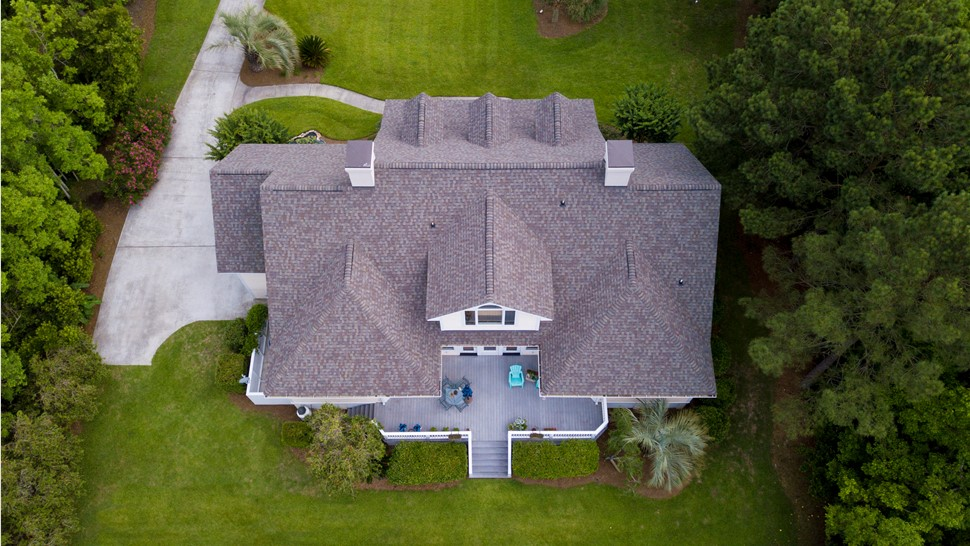
We measure roof size and pitch, map drainage per run, and place downspouts based on yard slope and foundation needs.
We check rainfall patterns, evaluate architecture, plan downspout placement (ideally 6–10 feet from the foundation), and inspect fascia condition.
For most homes, here's what we recommend:
Most homes: K-style seamless gutters at 5 or 6 inches depending on roof area; works with guards and keeps maintenance low.
Historic projects: seamless half-round sized for capacity while keeping the period look.
Built-in box systems: assess repair vs conversion to K-style, depending on structure and goals.
Seamless vs sectional—why it matters:
Sectional gutters come in 10- or 20-foot lengths that snap or screw together; every seam is a potential leak point.
Seamless gutters eliminate those joints along straight runs; we cut to exact length on site and only seam at corners.
Recent Projects
James Carter
Maria Lopez
David Thompson
Angela Brooks
Kevin Patel
We'll measure your roof, check fascia, size for rainfall, and plan downspout placement. Every installation includes our Lifetime Workmanship Warranty and the Gold Standard Protection Plan for timelines and cleanup standards.