|
Special Promotion
Ultimate Discount
|
55% OFF
|
Special Promotion
Ultimate Discount
|
55% OFF
|
Special Promotion
Ultimate Discount
|
55% OFF
|
Special Promotion
Ultimate Discount
|
55% OFF
|
Special Promotion
Ultimate Discount
|
55% OFF
|
Special Promotion
Ultimate Discount
|
55% OFF
Vertical Siding (Board & Batten)
Strong vertical lines, clean transitions, and modern curb appeal—use as accents or full elevations.
Overview / What This Page Covers
This page covers vertical siding styles and board and batten profiles from a design and planning perspective. You'll see where vertical works best on different home styles, how board and batten spacing affects the overall look, and which colors and trim combinations create the most impact. We'll also show you how to mix vertical siding with other profiles for a custom appearance that fits your home's architecture.
What you'll find here:
Board and batten definition — what makes this vertical profile unique and why vinyl versions work so well
Best placement strategies — where vertical siding creates the most visual impact on your
home
home
Spacing and rhythm options — how different board widths and batten spacing change the
overall feel
overall feel
Color and texture combinations — matching profiles with trim colors and textures for
maximum curb appeal
maximum curb appeal
Mix-and-match approaches — combining vertical with lap siding or shake profiles for
dimensional design
dimensional design
What Is Board & Batten?
Board and batten is a vertical siding profile that alternates wide boards with narrow strips called battens. Picture this: wide panels running vertically up your wall, then thin strips covering the seams between them. That's the classic board and batten look.
The way it works is simple. The wide boards (usually 7 to 8 inches) provide the main coverage, while the narrow battens (typically 1 to 2 inches) cover the joints. This creates natural shadow lines that add depth and visual interest to your exterior.
With vinyl board and batten, you get that same traditional appearance but with the durability and low maintenance vinyl provides. The boards and battens are manufactured as a complete system, so they lock together properly and maintain consistent spacing. No painting, no staining, no worrying about wood rot or insect damage.
The vertical orientation also helps water run off naturally, which matters during wet seasons and freeze‑thaw cycles. Vinyl handles weather changes without the expansion and contraction issues you get with wood materials.
Placement
Gable accents are probably the most popular application. Picture lap siding running across your main walls, then board and batten on the upper gables. It breaks up large wall sections and draws your eye upward, making the home feel taller and more proportioned.
Entry areas and bump‑outs are perfect for this too. You know that front entrance section that sticks out a bit? Or maybe a bay window area? Vertical siding helps these spots stand out as design features instead of just looking like add‑ons.
Full elevation coverage is where you really see the modern farmhouse influence. Instead of just accents, you're covering entire walls or even the whole house in vertical siding. This works especially well on simpler home styles where you want to add character without changing the basic architecture.
What works best:
Narrow sections like dormers or entry columns — these naturally want vertical lines
Wider wall sections can handle vertical too — consider window alignment
Simple home styles benefit most from full coverage approaches
Mixed approaches let you highlight specific architectural features
Profile Rhythm
Narrow spacing around 4 inches between reveals creates more horizontal shadow lines and more visual rhythm. This fits traditional aesthetics and creates more seam lines — a busier appearance overall.
Wide spacing at 6 inches or more gives you a cleaner, calmer look with fewer seams showing. The boards themselves become more prominent, with larger unbroken sections of color. This tends to feel more contemporary and works well on modern farmhouse styles.
Batten width matters too:
Thin battens (≈1 inch) — keep focus on the main boards
Wider battens (≥2 inches) — become part of the design, creating deeper shadow lines that
stand out
stand out
Medium battens — balanced choice for most applications
Texture, Color & Trim Pairings
Smooth vs wood‑grain textures change the entire character of your siding. Smooth gives a clean, painted look that suits contemporary and transitional styles. Wood‑grain adds depth and catches light differently, creating a more authentic board‑and‑batten feel.
Dark colors need a bit more thought with vinyl. Darker siding absorbs more heat. Modern vinyl handles this better than older products, but choose product lines designed for darker shades.
High contrast vs subtle — likely the biggest choice you’ll make. Sharp contrast (dark siding + bright white trim) makes features pop. Near‑tone palettes (gray + darker gray, sage + cream) stay refined and understated.
Popular color combinations:
Navy/charcoal siding + white trim — classic farmhouse contrast
Gray siding + darker gray trim — definition without stark contrast
Sage/forest green + cream trim — grounded, earthy
White/light gray + black trim — modern pairing that’s trending
Mix‑and‑match ideas:
Lap on main walls + board & batten on gables
Board & batten lower level + lap above (two‑story definition)
Shakes on upper sections + board & batten accents
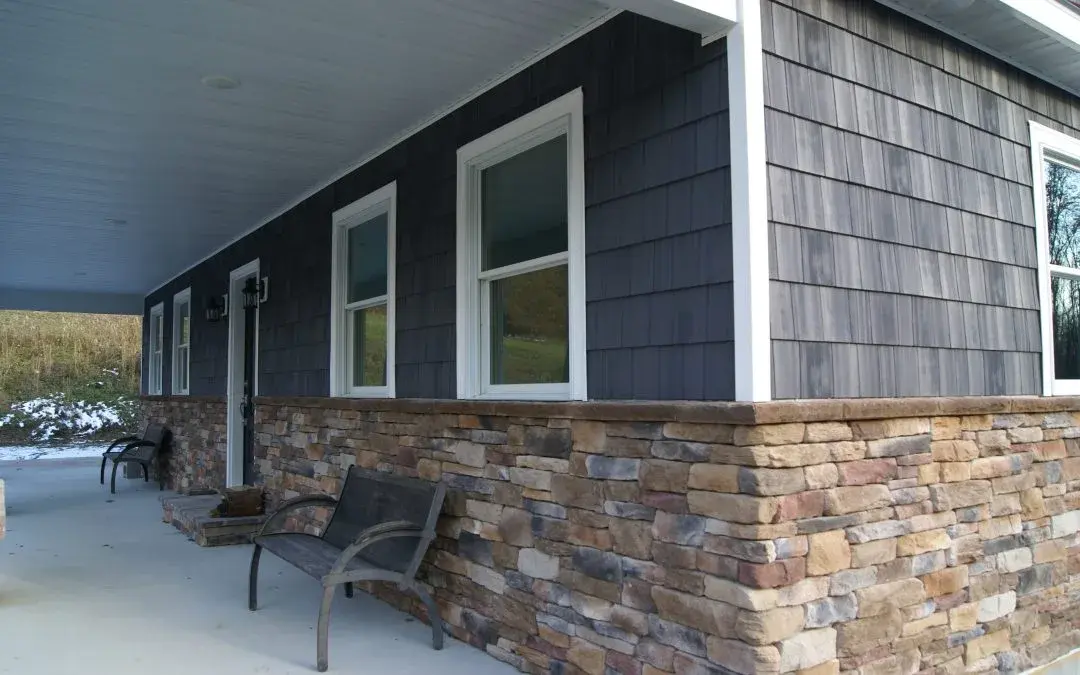
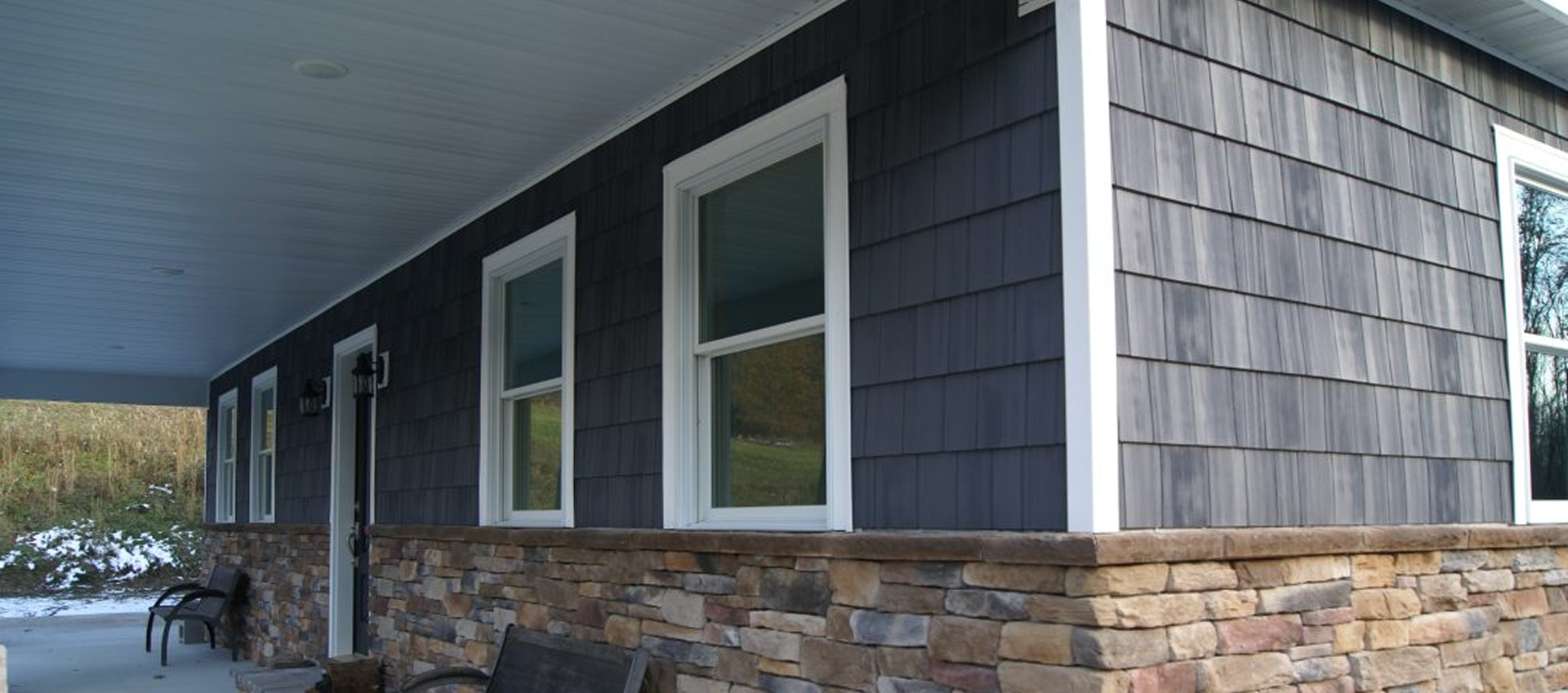
Stone/brick base + board & batten above
Proof (Project Cards)
Modern Farmhouse Gable Accent — Dark gray lap on main level; white board & batten on gables; black window trim.
Full Coverage Contemporary — Sage board & batten across the front elevation; natural‑stone columns; wide spacing.
Traditional Colonial Update — Cream lap with board & batten at entry and dormers; matching trim.
Mixed Profile Ranch — Light gray lap on main walls; darker gray board & batten at entry.
Coastal‑Inspired Design — White board & batten full coverage; navy shutters; coastal blue door.
Transitional Two‑Story Charcoal board & batten lower; lighter gray lap above.
RealWork Labs widget
Leading exterior home remodeling experts serving Ohio and Michigan with quality craftsmanship since [Year].Leading exterior home remodeling experts serving Ohio and Michigan with quality craftsmanship since [Year].
Toledo
2852 South Ave Toledo, OH 43609
(419) 495-8598
Farmington Hills
23941 Research Dr
Farmington Hills, MI 48335
(248) 290-6843
© 2025 Your Company Name. All rights reserved.