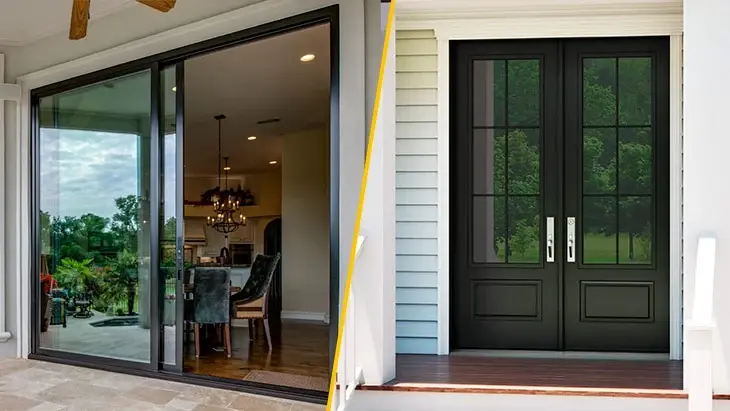
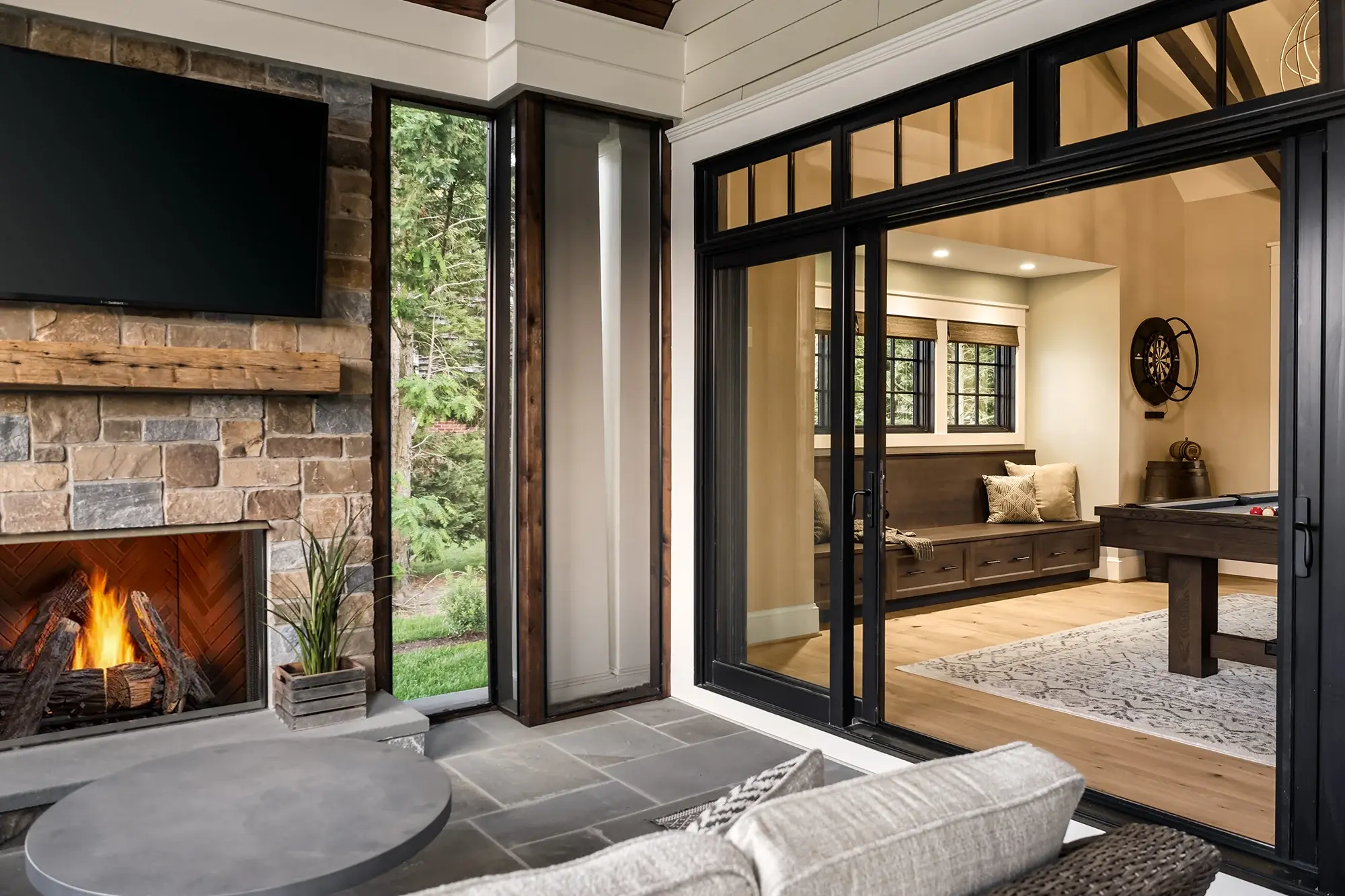
Sliding windows move horizontally along a track. You slide one or both panels to the side to open them. No cranking, no lifting—just a smooth glide left or right.
The way it works is pretty straightforward. Each panel sits in its own track. When you want air, you slide the movable panel across. When you're done, you slide it back and lock it. The lock keeps the panels snug against the weatherstripping, which is what seals out drafts and water.
Two-panel sliders are the simplest setup. You've got two panels side by side. Usually one slides and the other stays fixed, but some models let both panels slide. If both move, you can open from either side depending on where you're standing or which way the breeze is coming from.
Three-panel sliders have a fixed center panel with sliding panels on each side. The center panel doesn't move—it's just glass, no hardware, no seams down the middle. This setup works well on wider walls because you get that big, clean view in the center and ventilation on both sides when you need it.
Why vinyl works for sliding windows: Vinyl handles moisture without rotting or warping. It doesn't need paint, and it holds up through freeze-thaw cycles without cracking or swelling. The tracks stay consistent, the panels glide smoothly, and you're not dealing with seasonal adjustments like you would with wood. Vinyl sliding windows also come in different colors and finishes, so you're not stuck with basic white if that's not your style.